Veturmusic
A platform artists can trust
Replacing a manual WordPress distribution workflow with a structured, real-time music platform.
01 — The challenge
A landing page, a login, and a form
Veturmusic's original workflow had three steps: a landing page, a login, and a form. Artists submitted music, files landed in a WordPress database, and an administrator manually distributed to streaming platforms — one by one, no tracking, no validation, no visibility for the artist after submission.
02 — The solution
A structured, user-centered flow
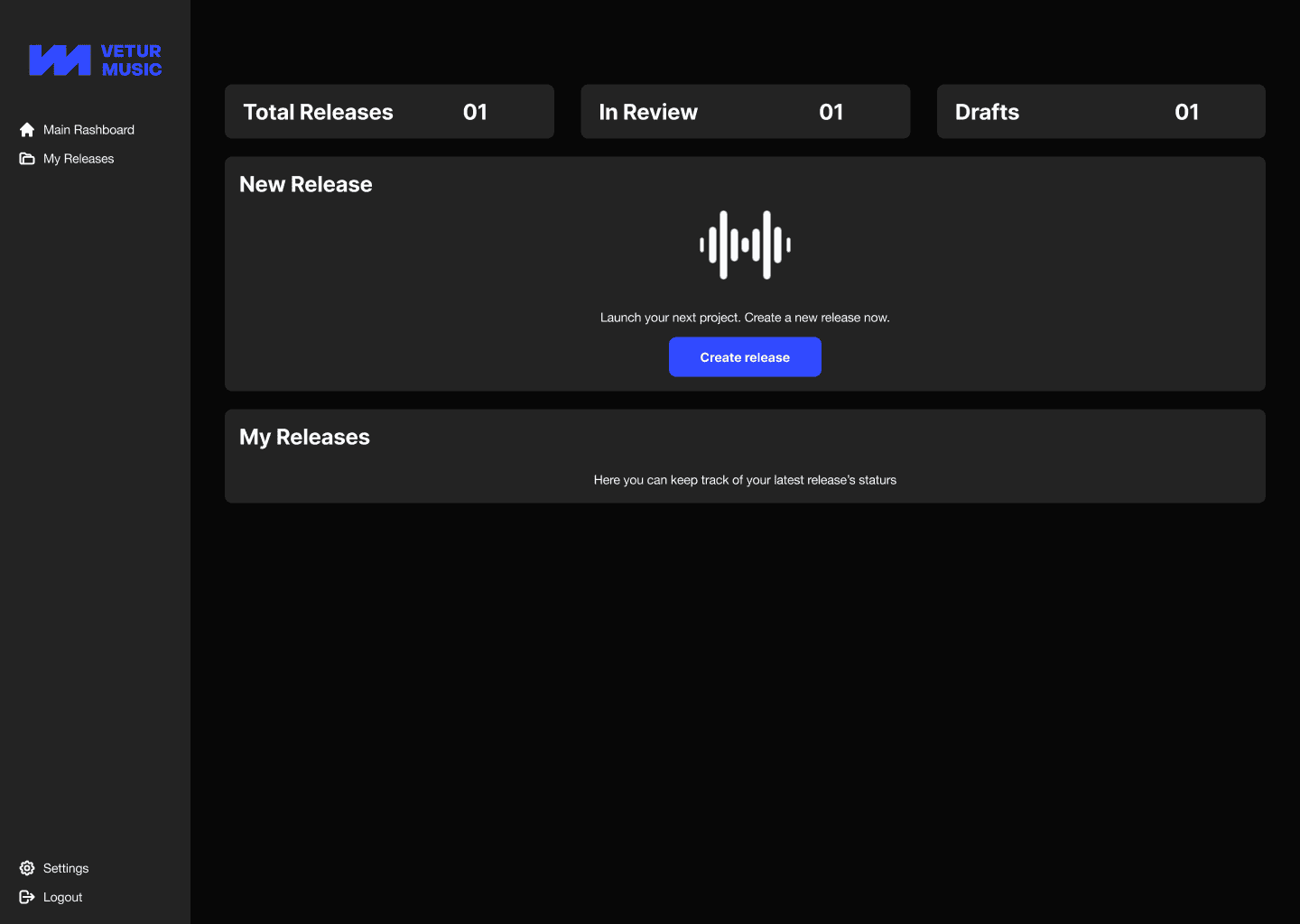
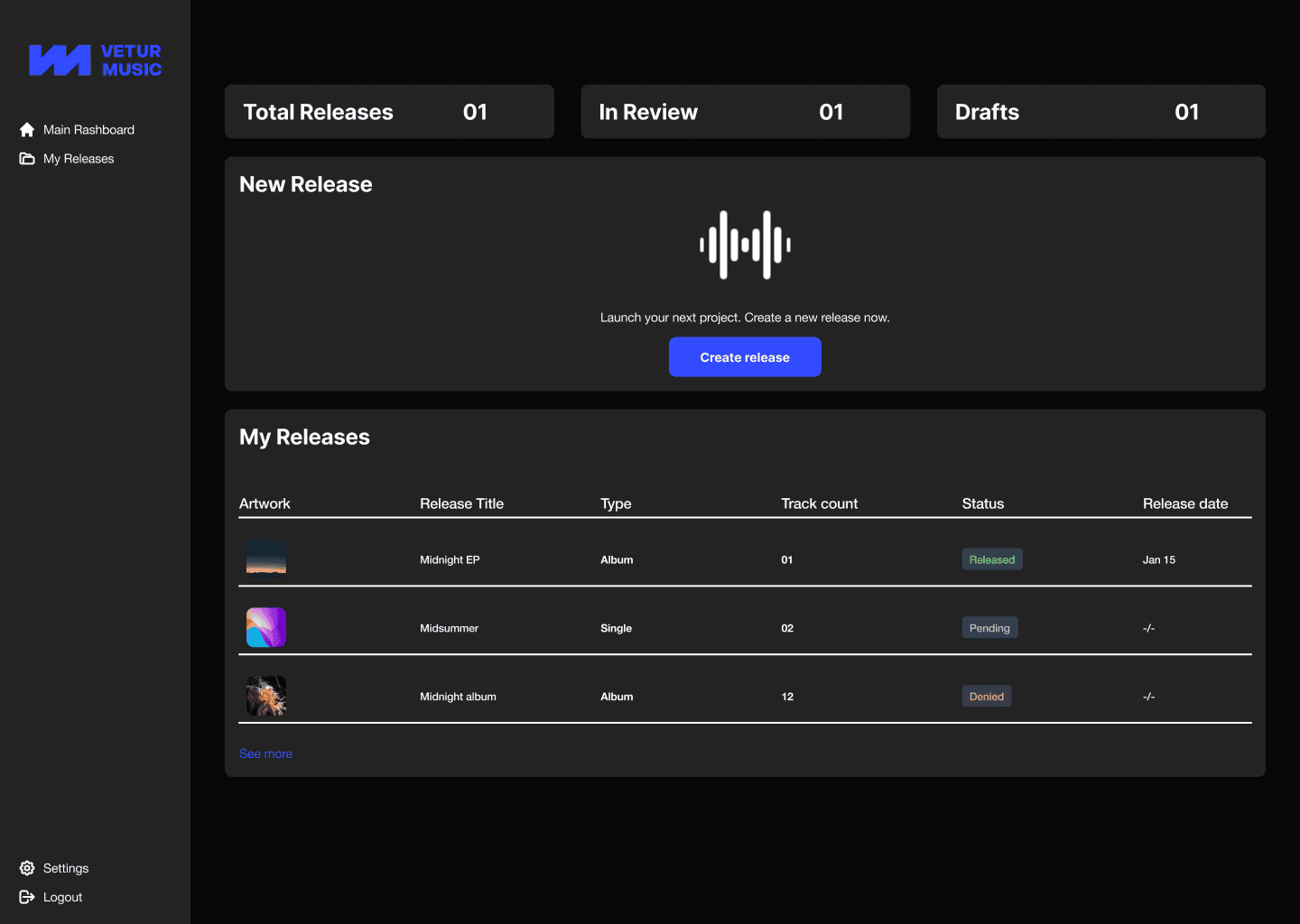
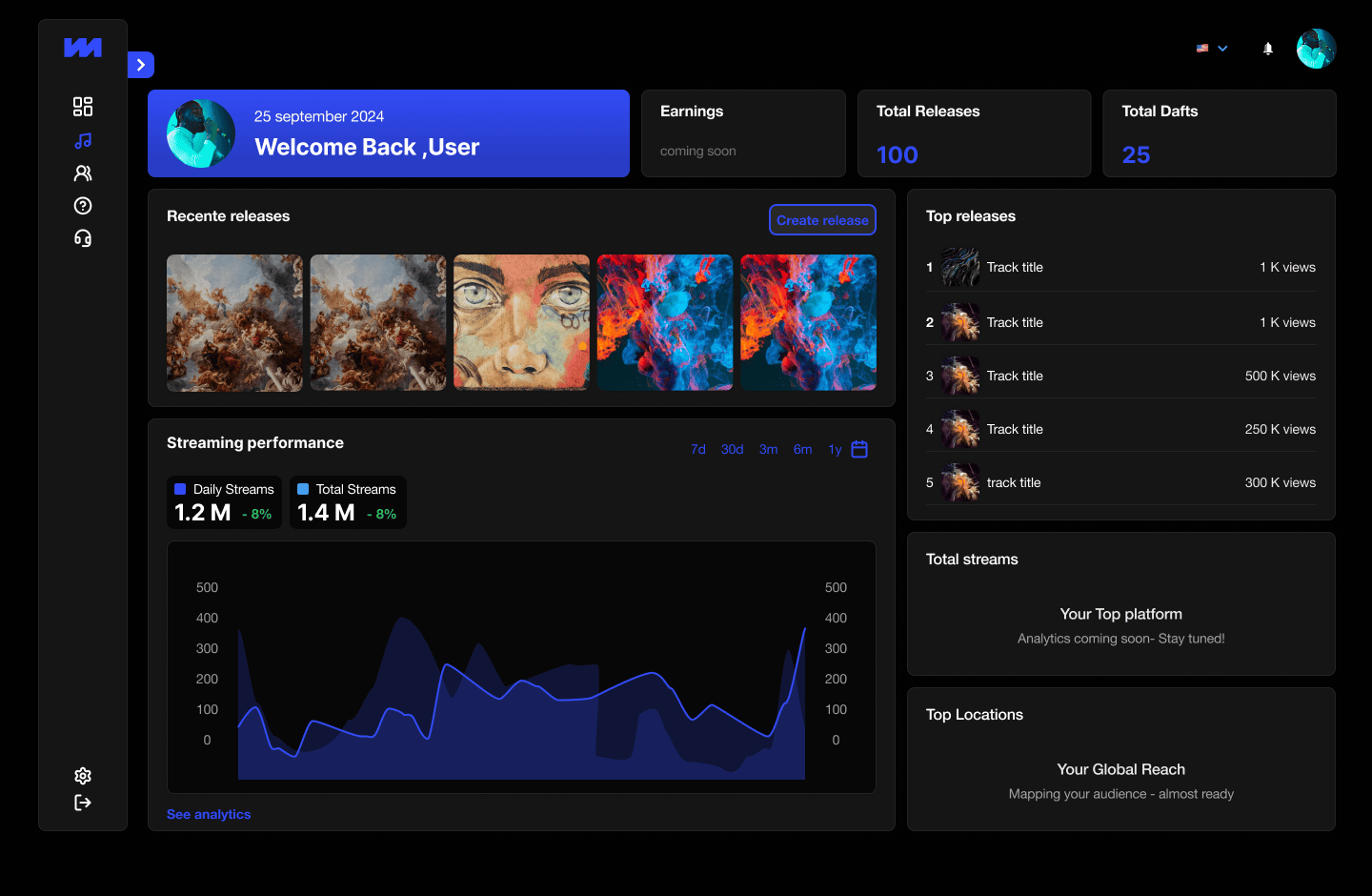
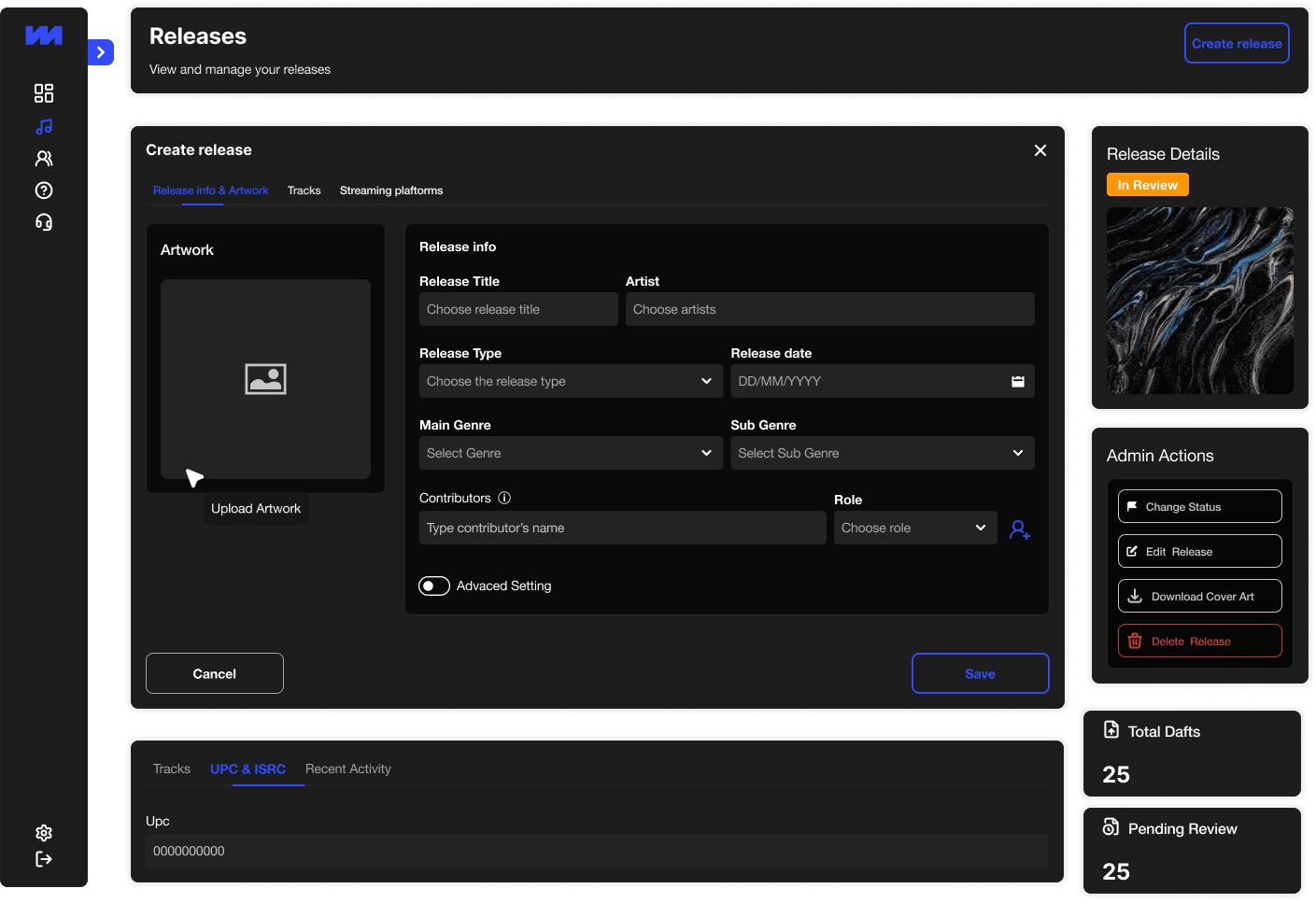
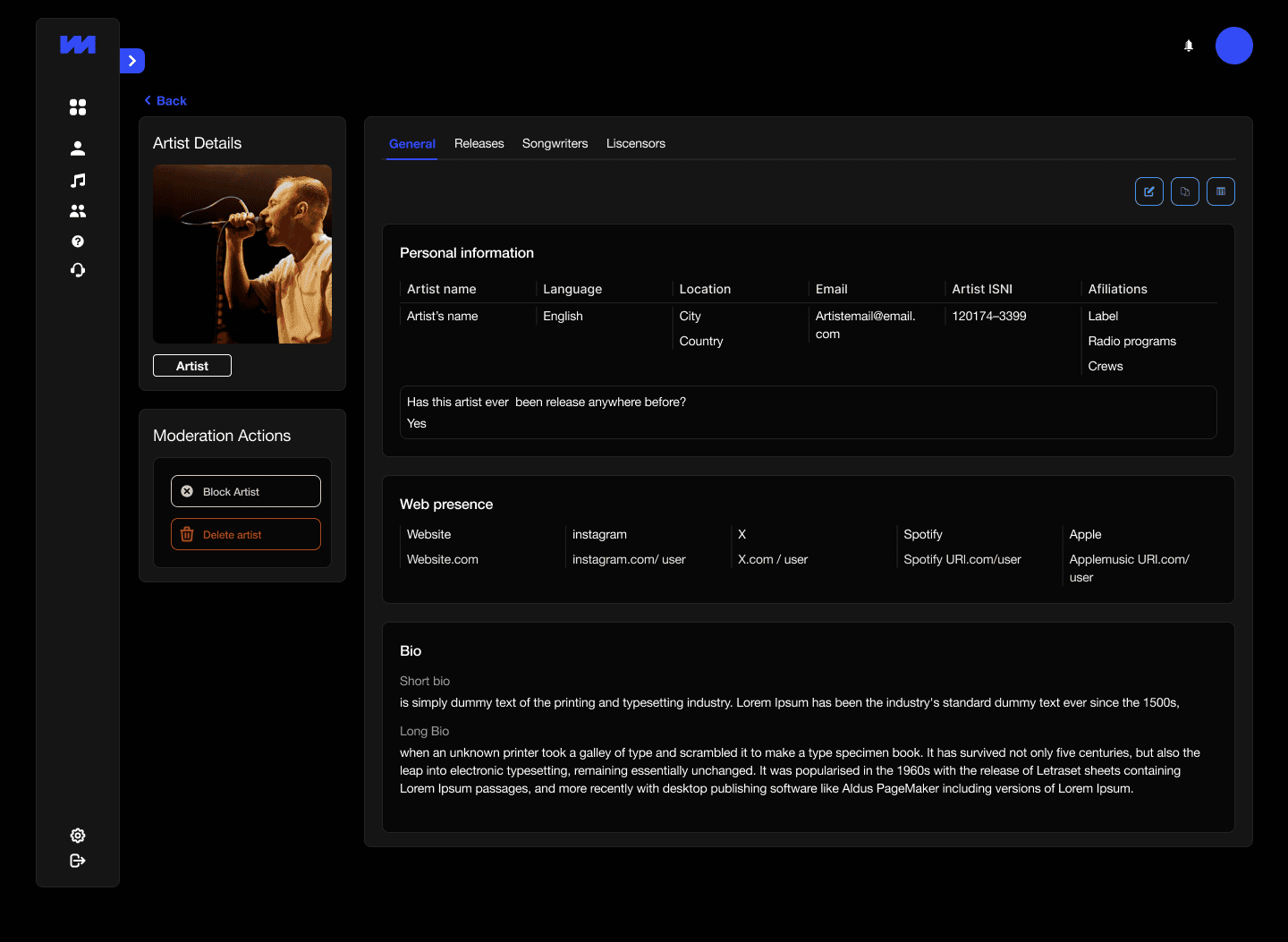
The final platform replaced every manual step with a structured flow: a guided metadata wizard, a real-time artist dashboard, and a centralized admin panel with Label Grid API integration — built on a modular design system.
Metadata wizard
Every release meets global platform standards before submission.
Artist dashboard
Full visibility from draft to live, in real time.
Admin + API
Approvals, distribution, and Label Grid under one roof.
03 — Inside the product
Show the work
From early information architecture to a coherent, component-driven product. Click any screen to enlarge.

04 — What shipped
Key features
Metadata wizard
Validated releases that meet platform standards.
Artist dashboard
Real-time visibility from draft to live.
Admin panel
Approvals and distribution in one place.
Label Grid integration
Automated distribution via API.
Analytics dashboard
Performance at a glance.
Component library
One system across artist & admin.
05 — The result
A platform artists and administrators can trust
Every previously manual, untracked, or invisible step now has a structured, automated counterpart — cutting team delivery time by ~25%. I was promoted to Project Manager on the back of this work.
06 — Craft
Tools & deliverables
Figma
Design & prototyping.
Design System
Adaptive components.
Label Grid API
Automated distribution.
Project Mgmt
Scoping & delivery.