Structure IQ
From demo to production
A satellite-data SaaS for monitoring the structural integrity of bridges, buildings, and critical infrastructure.
01 — The challenge
A working demo, but not a product
StructureIQ had a working demo running on hardcoded data — built to prove a concept visually, not to connect to real infrastructure. Two problems needed solving at once: wiring the interface to their actual database, and redesigning the experience entirely. None of the data was organized in a way that let a specialist act on it quickly. The task was to define the information hierarchy and rebuild around three very different types of users.
02 — The solution
Three interfaces, one coherent product
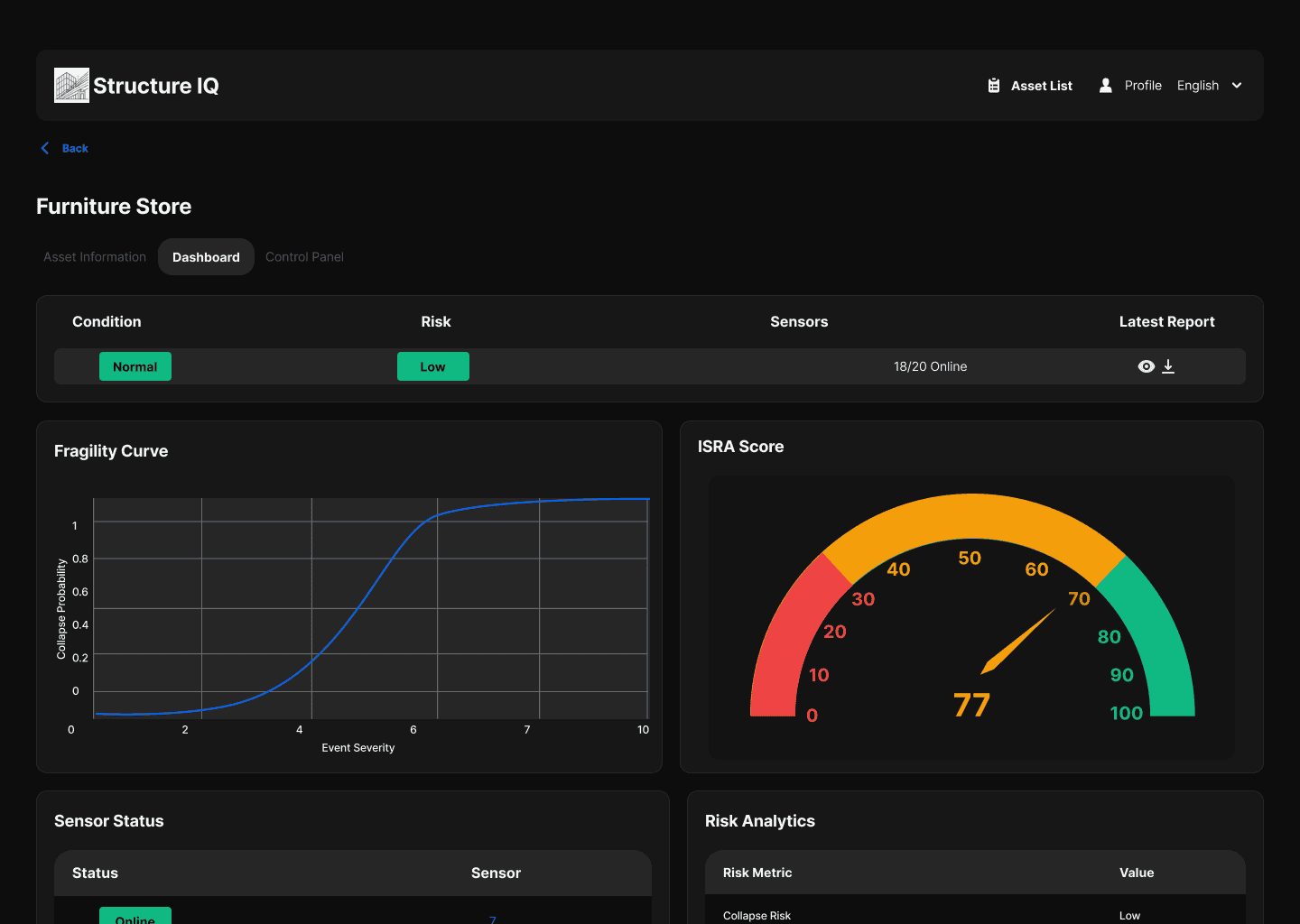
Working directly with the StructureIQ team, I mapped what each user needed to see and act on, established the information hierarchy, and got sign-off before development began — then designed and tested the platform around a global sensor-alert system.
Map & align
Define the hierarchy and user flows for admin, client, and engineer; get client sign-off.
Design 3 interfaces
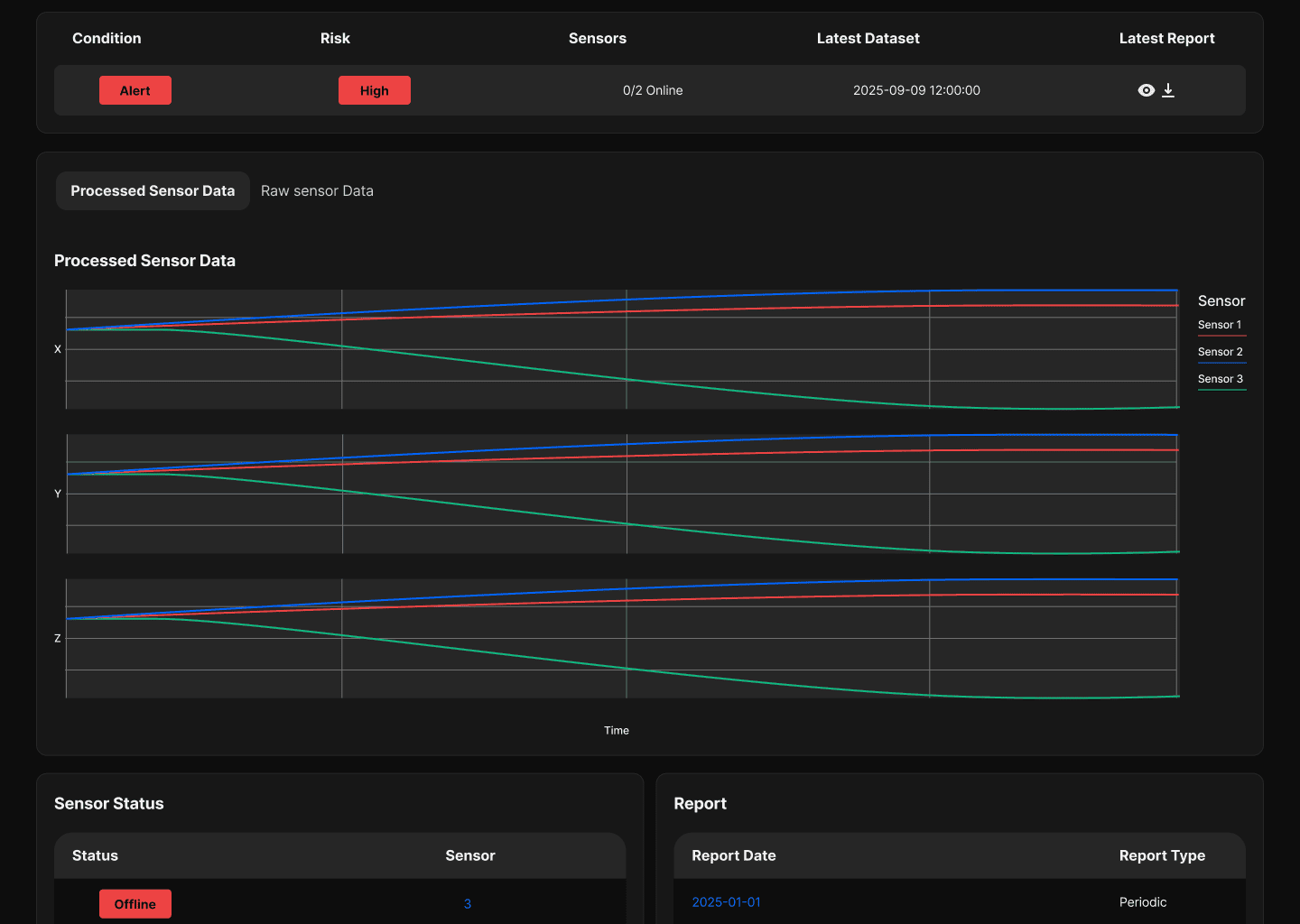
Organize dense technical data into fast, unambiguous surfaces per user type.
Global alerts
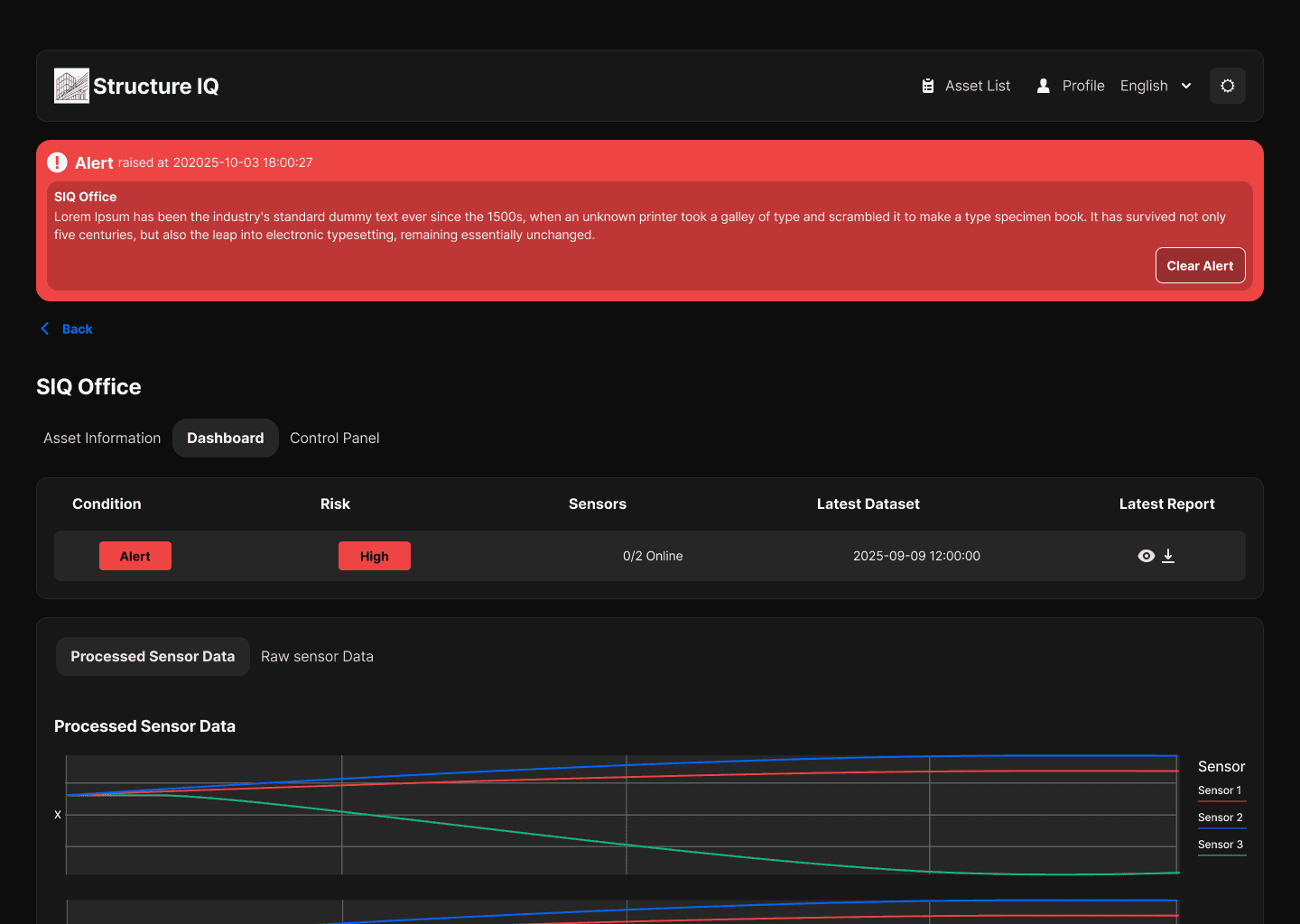
Surface structural anomalies anywhere in the app the moment they trigger.
03 — Inside the product
Show the work
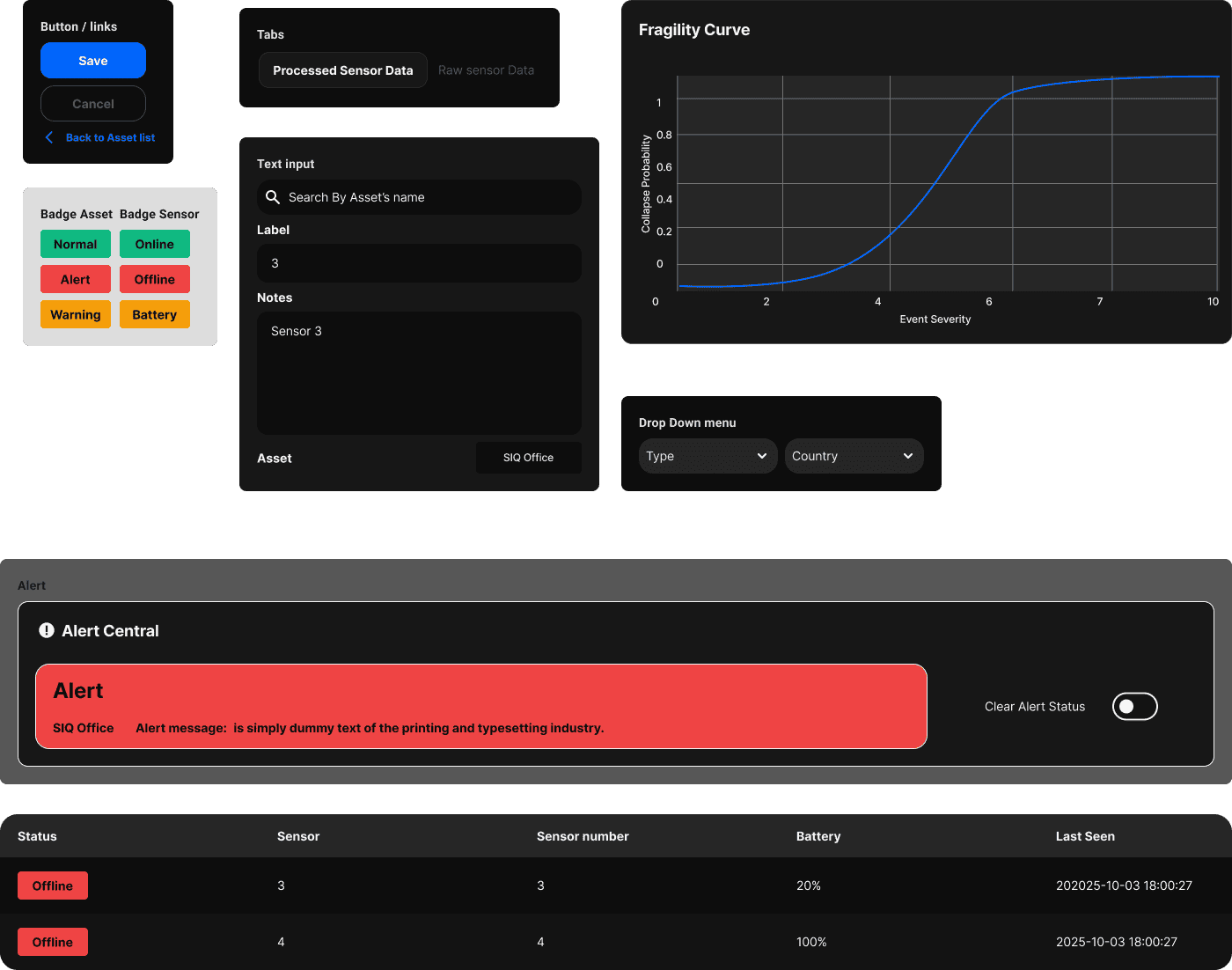
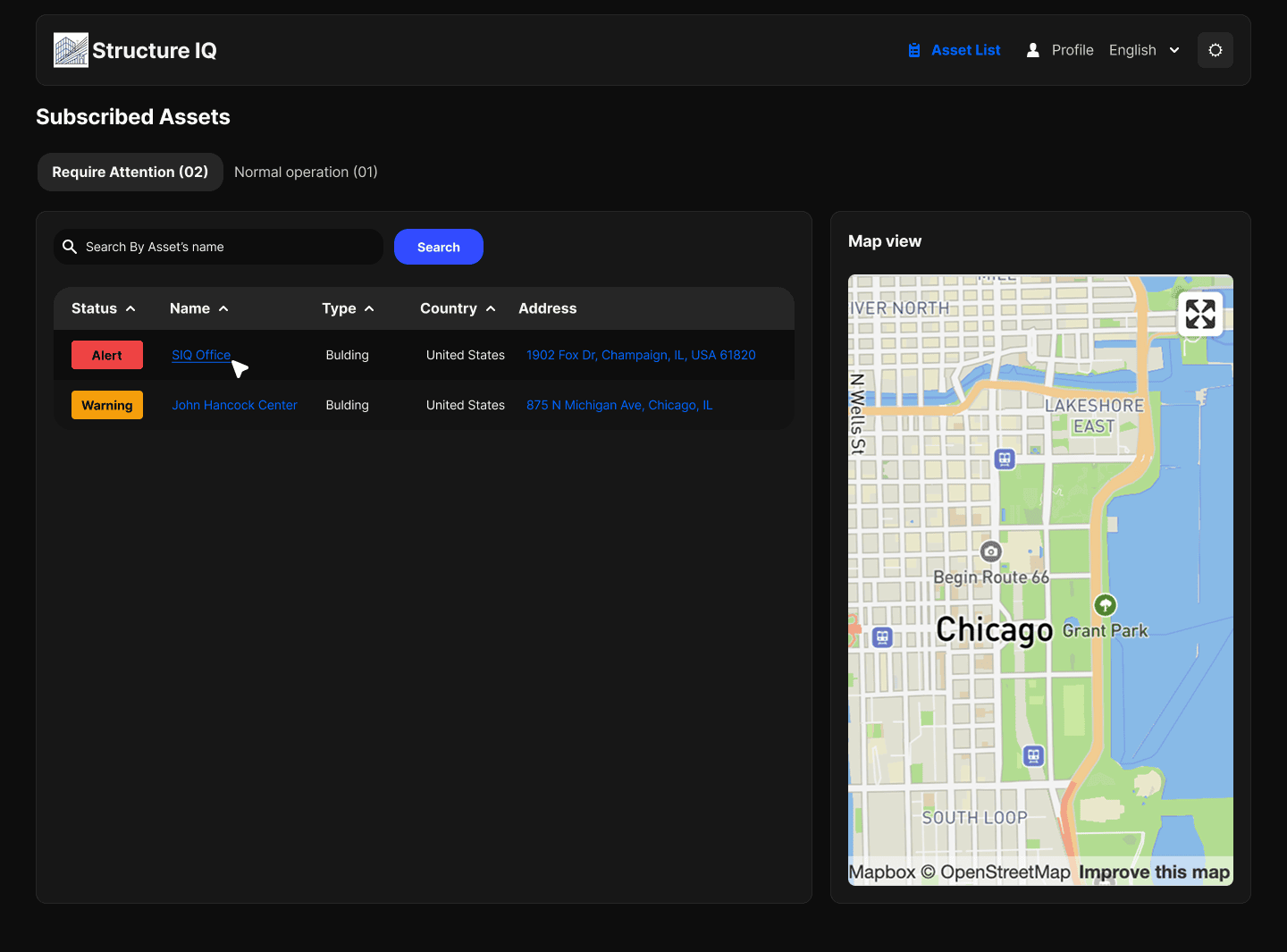
A modular system covering data visualization, alert and sensor states, navigation, and tables. Click any screen to enlarge.

04 — What shipped
Key features
General Administrator
Full-access control surface for the platform.
Client interface
Status and reporting for infrastructure owners.
Engineer interface
Dense, on-site monitoring and diagnostics.
Global alert system
Anomalies surface anywhere, the moment they trigger.
Design system
Gauges, charts, maps, tables — one shared library.
Information hierarchy
A framework that let specialists act quickly.
05 — The result
From concept to production, with zero ambiguity at handoff
The StructureIQ team highlighted the speed of delivery and the quality of communication — direct client engagement, clear deliverables, and a clean handoff. Client satisfaction went up.
06 — Craft
Tools & deliverables
Figma
Design & prototyping.
Data Viz
Gauges, charts, maps.
Design System
Reusable components.
Handoff
Specs the dev team built from.